






Close Menu
Legal MagLegal Mag
  • Home
  • Legal News
  • Intellectual Property
  • Litigation
  • Regulation
  • Technology
  • More
    • Firms
    • Law Practice
    • Trending
    • Press Release
What's On
Trump administration backs Bayer’s Supreme Court bid on Roundup lawsuits

Trump administration backs Bayer’s Supreme Court bid on Roundup lawsuits

December 3, 2025
Bessent warns Supreme Court tariff ruling would hurt American people

Bessent warns Supreme Court tariff ruling would hurt American people

December 3, 2025
New MCA Payment Tool Helps Entrepreneurs Ease Cash Flow Challenges During National Entrepreneurship Month

New MCA Payment Tool Helps Entrepreneurs Ease Cash Flow Challenges During National Entrepreneurship Month

November 13, 2025
Autumn Budget Likely to Increase Pressure on SMEs, New Survey Warns

Autumn Budget Likely to Increase Pressure on SMEs, New Survey Warns

November 12, 2025
Pension Contribution Deadline 2026: How to Use Carry Forward to Save £18,000 in Tax

Pension Contribution Deadline 2026: How to Use Carry Forward to Save £18,000 in Tax

November 1, 2025
Facebook X (Twitter) Instagram
Legal MagLegal Mag
Newsletter
  • Home
  • Legal News
  • Intellectual Property
  • Litigation
  • Regulation
  • Technology
  • More
    • Firms
    • Law Practice
    • Trending
    • Press Release
Legal MagLegal Mag
Home » In the Wake of ‘Amgen v. Sanofi,’ the USPTO Clarifies the Patent Enablement Requirement
Intellectual Property

In the Wake of ‘Amgen v. Sanofi,’ the USPTO Clarifies the Patent Enablement Requirement

News RoomBy News RoomMay 24, 20242 Mins Read
Facebook Twitter Pinterest LinkedIn Tumblr Email
In the Wake of ‘Amgen v. Sanofi,’ the USPTO Clarifies the Patent Enablement Requirement
Share
Facebook Twitter LinkedIn Pinterest WhatsApp Email

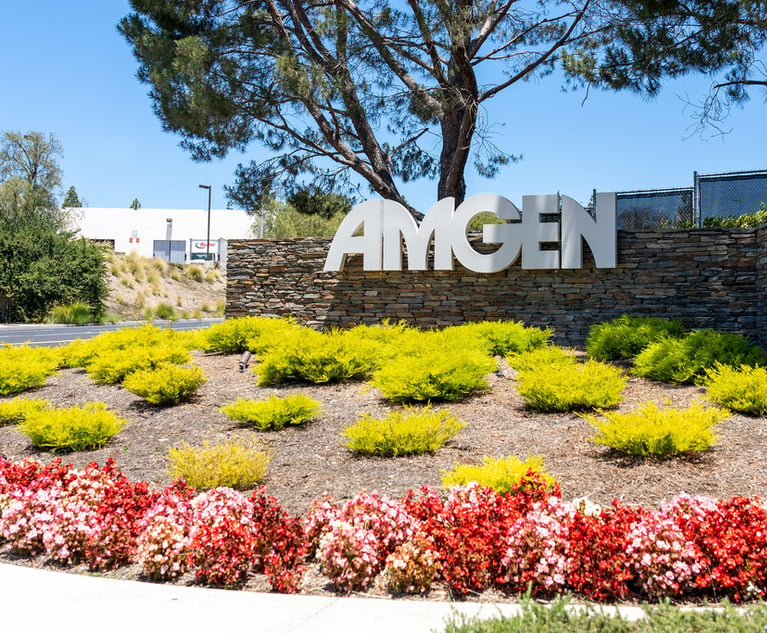
On Jan. 10, the U.S. Patent and Trademark Office (USPTO) published guidelines on the enablement requirement under 35 U.S.C. 112(a) in view of the recent hallmark decision by the U.S. Supreme Court, Amgen v. Sanofi, 143 S. Ct. 1243 (2023) (Amgen). The Supreme Court unanimously affirmed the determination that Amgen’s claims covering a genus of monoclonal antibodies were invalid due to a lack of enablement. The asserted claims were directed to potentially millions of antibodies, and the specification only disclosed amino acid sequences for 26 antibodies. The court held that to make and use the claimed antibodies would require an unreasonable amount of experimentation, and thus, the claims were not enabled.

The published guidelines are primarily for USPTO employees to use when determining if claims in a utility patent application are enabled in view of Amgen. According to the guidelines, the USPTO will continue to apply the Wands factors when evaluating whether the amount of experimentation required to enable the claims is reasonable. Following Amgen, there was uncertainty as to the treatment of antibody claims. The guidelines have alleviated some of the uncertainty surrounding how the USPTO examiners will treat antibody claims. This article provides a brief overview of the Amgen decision and USPTO guidelines, and provides some practical guidance on how one might be able to capture a genus of antibodies in light of these recent developments.
‘Amgen v. Sanofi’

Share. Facebook Twitter Pinterest LinkedIn Tumblr Email
Previous Article‘Landmark’ $15M Court Fine Against Illicit Cannabis Operator in Central NY ‘Sends Message,’ Governor Says
Next Article GOP Attorneys General, Firearms Advocates, and Sen. Ted Cruz Line Up to Defend US Gunmakers Against Mexican Suit at Supreme Court

Related Posts

Who Got the Work: Saul Ewing Team Appears for Samsung Bioepis in Amgen Patent Case

Who Got the Work: Saul Ewing Team Appears for Samsung Bioepis in Amgen Patent Case

August 22, 2024
E-Commerce Company Alleges Albertsons Stole Trade Secrets to Develop Own Platform

E-Commerce Company Alleges Albertsons Stole Trade Secrets to Develop Own Platform

August 20, 2024
How ‘In re Cellect’ and a Proposed Rule Could Affect Double Patenting

How ‘In re Cellect’ and a Proposed Rule Could Affect Double Patenting

August 20, 2024
Latest Articles
Bessent warns Supreme Court tariff ruling would hurt American people

Bessent warns Supreme Court tariff ruling would hurt American people

December 3, 20252 Views
New MCA Payment Tool Helps Entrepreneurs Ease Cash Flow Challenges During National Entrepreneurship Month

New MCA Payment Tool Helps Entrepreneurs Ease Cash Flow Challenges During National Entrepreneurship Month

November 13, 202513 Views
Autumn Budget Likely to Increase Pressure on SMEs, New Survey Warns

Autumn Budget Likely to Increase Pressure on SMEs, New Survey Warns

November 12, 202516 Views
Pension Contribution Deadline 2026: How to Use Carry Forward to Save £18,000 in Tax

Pension Contribution Deadline 2026: How to Use Carry Forward to Save £18,000 in Tax

November 1, 202512 Views
Stay In Touch
  • Facebook
  • Twitter
  • Pinterest
  • Instagram
  • YouTube
  • Vimeo
Don't Miss
Court Overturns Vehicular Assault Conviction: ‘Utility Vehicle’ Does Not Meet Definition of ‘Motor Vehicle’

Court Overturns Vehicular Assault Conviction: ‘Utility Vehicle’ Does Not Meet Definition of ‘Motor Vehicle’

By News RoomMarch 26, 2024

The Ohio Supreme Court recently overturned a felony conviction for aggravated vehicular assault after concluding…

The 2024 Am Law 100: Ranked by Gross Revenue

The 2024 Am Law 100: Ranked by Gross Revenue

April 16, 2024
Defending Claims Where Extreme Weather Is to Blame: Our Changing Climate’s Impact on Civil Litigation

Defending Claims Where Extreme Weather Is to Blame: Our Changing Climate’s Impact on Civil Litigation

July 18, 2024
© 2025 Legal Mag. All Rights Reserved.
  • Privacy Policy
  • Terms of use
  • Advertise
  • Contact

Type above and press Enter to search. Press Esc to cancel.